 humanAi InsightUnderstand ItUnderstand AIhumanAi InsightExplains AI developments and their practical effects on everyday work, business, and life.Visit website ↗




Employment, Income & Workplace SecurityPrivacy, Personal Data & Digital SovereigntyNational Security, Global Competition & Technological Independenceworkforce displacementdata privacyStargate ProjectAI infrastructureOpenAI SoftBank OracleAI ethicsdata center energy useUS AI raceworkforce reskilling
Why You Should Care
- Will this affect my job, livelihood, bargaining power or career prospects?
- How could national AI competition affect security, supply, freedom and future choices?
- How could decisions about national AI infrastructure affect technological independence?
Key takeaways
- The $500B Stargate Project aims to secure U.S. AI dominance through massive new data center infrastructure.
- Economic benefits include 100,000+ jobs, but require proactive workforce reskilling to offset automation risks.
- Ethical oversight, renewable energy integration, and international cooperation are vital to mitigate privacy, bias, and geopolitical tensions.
"Title: The Stargate Initiative: Navigating the Intersection of Ambition and Responsibility in AI Infrastructure
Introduction
The announcement of the $500 billion Stargate Project marks a significant milestone in the United States' pursuit of artificial intelligence (AI) supremacy. This ambitious venture, a collaboration between OpenAI, SoftBank, Oracle, and MGX, aims to revolutionize AI infrastructure by constructing extensive data centers across the nation. While the project's scale and potential benefits are undeniable, it also raises critical questions about the evolving relationship between AI and society, particularly concerning economic impact, ethical considerations, and global competition.
Economic Implications
The Stargate Project promises substantial economic benefits, including the creation of over 100,000 jobs and significant investments in local economies. The construction and operation of data centers are expected to stimulate growth in various sectors, from construction to technology services. However, this development also necessitates a discussion on the future of work in an AI-driven economy.
As AI systems become more integrated into various industries, there is a potential for both job displacement and creation. While new roles may emerge in AI development and maintenance, positions in sectors susceptible to automation could diminish. This duality underscores the need for comprehensive workforce development programs that focus on reskilling and upskilling, ensuring that the labor force can adapt to the changing demands of the economy.
Ethical and Social Considerations
The centralization of vast amounts of data within these new infrastructures raises significant ethical concerns. Data privacy and security must be prioritized to maintain public trust. Implementing robust data governance frameworks that ensure transparency, accountability, and user consent is essential. Moreover, the potential for AI systems to perpetuate biases or make decisions that impact individuals' lives necessitates the development of ethical guidelines and oversight mechanisms.
The environmental impact of constructing and operating large-scale data centers also warrants attention. These facilities consume substantial energy, contributing to carbon emissions. Integrating renewable energy sources and implementing energy-efficient technologies can mitigate these effects, aligning the project's goals with broader sustainability initiatives.
Geopolitical Dynamics
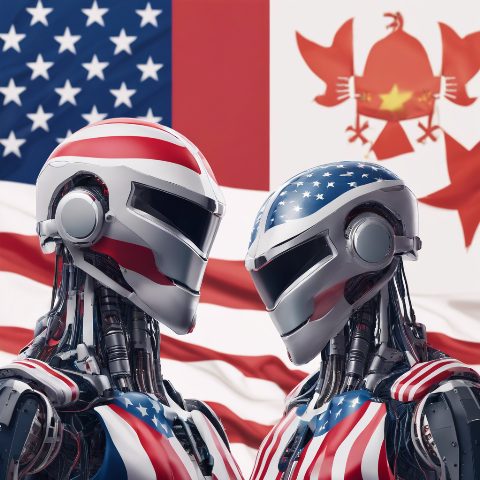
The Stargate Project positions the United States as a formidable player in the global AI race, particularly in competition with nations like China. The emergence of DeepSeek, a cost-effective Chinese AI model, highlights the rapid advancements occurring internationally. While the Stargate initiative aims to bolster national security and economic dominance, it also risks escalating geopolitical tensions and fostering technological nationalism.
A balanced approach that encourages international collaboration, while safeguarding national interests, is essential. Engaging in dialogues with global partners to establish common standards and ethical guidelines can promote the responsible development and deployment of AI technologies worldwide.
Public-Private Partnerships
The collaboration between government entities and private corporations in the Stargate Project exemplifies the potential of public-private partnerships in driving technological innovation. However, it is crucial to delineate clear roles and responsibilities to prevent conflicts of interest and ensure that public welfare remains a priority. Establishing transparent governance structures can facilitate accountability and public trust in such large-scale initiatives.
Conclusion
The Stargate Project represents a monumental step in advancing AI infrastructure in the United States. Its success hinges not only on technological and economic achievements but also on addressing the ethical, social, and geopolitical challenges it presents. By fostering a balanced approach that emphasizes responsible development, sustainability, and international collaboration, the initiative can serve as a model for integrating AI into society in a manner that benefits all."
A QUICK ANSWER
Answer Engine Summary
The Stargate Project is a $500 billion collaboration between OpenAI, SoftBank, Oracle, and MGX to build massive AI data centers across the U.S. While it promises over 100,000 jobs and technological leadership against global competitors like China, it raises critical concerns regarding workforce displacement, data privacy, and the high energy consumption of large-scale facilities. Success depends on implementing robust ethical frameworks, sustainable energy practices, and transparent public-private governance.
QUESTIONS ANSWERED
Frequently Asked Questions
What is the Stargate Project?
It is a $500 billion joint venture by OpenAI, SoftBank, Oracle, and MGX to construct extensive AI data centers across the United States.
How will Stargate impact the job market?
While it will create over 100,000 construction and tech jobs, widespread AI adoption may displace other roles, necessitating comprehensive reskilling programs.
What are the main ethical and environmental concerns?
Centralized data raises privacy and bias issues, while massive data centers consume significant energy, requiring renewable integration to ensure sustainability.
How does Stargate affect the global AI race?
It positions the U.S. competitively against nations like China, though experts warn that balancing national security with international collaboration is essential to avoid technological nationalism.