 humanAi InsightUnderstand ItUnderstand AIhumanAi InsightExplains AI developments and their practical effects on everyday work, business, and life.Visit website ↗





Edward Jacak · Founder & Editor-in-Chief, Sixth City Digital PublishingNov 6, 2026 · Updated Nov 7, 2026
Employment, Income & Workplace SecurityHuman Choice, Oversight & AccountabilityNational Security, Global Competition & Technological Independenceworkforce displacementstargate initiativeai megaprojectus china ai raceai national securityartificial intelligence investmentai cyber warfareai infrastructure
Key takeaways
- Stargate represents a $500 billion strategic investment to secure U.S. AI leadership against China.
- The project prioritizes national security and robust cybersecurity defenses against AI-driven threats.
- Critics cite corporate consolidation, but proponents argue only major tech firms can scale this critical infrastructure.
"Title: Stargate: The Unavoidable AI Megaproject That Will Define the Next Century
By Rebbah Gamman
The $500 billion Stargate initiative is not just another AI investment. It’s a declaration. A line drawn in the sand that signals the United States’ recognition that AI dominance is no longer a luxury—it’s an existential necessity. Critics will call it reckless, short-sighted, and monopolistic. They’ll say that we are placing too much faith in a few tech titans, handing them unprecedented power over the infrastructure that will dictate how humanity interacts with artificial intelligence for generations. But here’s the reality: Risks from AI advances must be tolerated—no, embraced—if we are to reap the immense benefits that this technology promises while ensuring the security of the United States from cyberwarfare.
The Global AI Arms Race: Why Stargate Is Inevitable
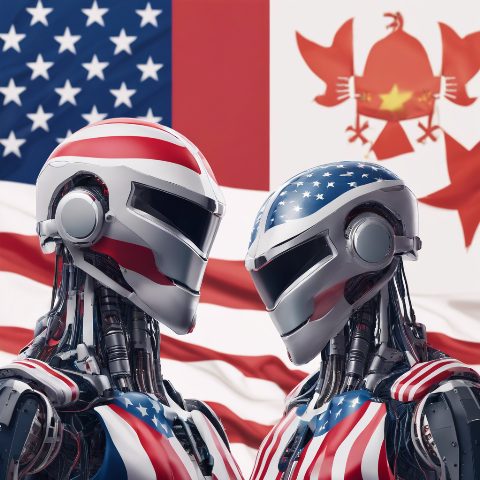
AI is the new nuclear. It’s that simple. Just as the 20th century was shaped by nuclear capabilities, the 21st century will be defined by AI supremacy. The United States cannot afford to fall behind—not to China, not to Europe, not to anyone. China’s aggressive AI development strategy, backed by its centralized state-controlled tech apparatus, means that the U.S. must act with an equal or greater level of urgency. And Stargate is that urgent response.
For those clutching their pearls over the price tag, let’s get one thing straight: $500 billion isn’t an expense. It’s an investment in American survival in a world where AI will dictate military strategy, economic dominance, and cybersecurity. If China gets to AGI first, do you think they’ll be generous with their discoveries? Do you think they’ll wait for the U.S. to catch up? No. AI is the ultimate power accelerator, and the first nation to master it will dictate the future of global leadership.
The Critics’ Concerns—And Why They’re Missing the Point
Of course, there are critics. There always are. Let’s take their concerns one by one:
“This is just a corporate giveaway to OpenAI, Oracle, and SoftBank.”
No kidding. And what’s your alternative? A fragmented approach that allows a hundred small AI firms to tinker while China consolidates power into a state-controlled AI monopoly? No. AI infrastructure at this scale requires the technological muscle, global experience, and logistical capabilities of the biggest players in the game. Like it or not, these companies are our best bet for securing AI dominance.
“The government shouldn’t be this involved in AI development.”
Normally, I’d agree. But this isn’t a normal situation. AI is too powerful to be left purely to the whims of the free market. We’re talking about an industry that will define national security, economic stability, and the very fabric of society. Governments must have a seat at the table—not just as regulators, but as active investors and strategists.
“$500 billion could be spent on better things.”
Better things? What’s better than securing America’s future? You want public transit? Green energy? Better schools? AI will touch every single one of those sectors, shaping their efficiency, security, and capabilities. This is a foundational investment, one that will ensure America is not left behind in a world where AI defines the rules.
National Security: The Silent Crisis That Stargate Will Address
Let’s cut to the most critical reason Stargate must happen: Cyberwarfare. Right now, our national cybersecurity defenses are barely holding. AI-driven attacks will soon outpace traditional defensive measures, rendering our financial systems, power grids, and communications networks vulnerable to adversarial nations and non-state actors.
Stargate isn’t just about training better chatbots or improving customer service algorithms. It’s about securing AI infrastructure so that it serves American interests first and foremost. Without that control, we’re handing over the keys to our economy, military, and social stability to foreign adversaries who have zero incentive to play fair.
The Road Ahead: What Success Looks Like
If Stargate succeeds, we won’t just maintain parity with China—we’ll surpass them. We’ll build AI models that outthink, outmaneuver, and out-secure anything developed overseas.
What does that mean for the everyday American? It means AI-powered healthcare that detects diseases earlier and more accurately. It means AI-enhanced energy grids that optimize power usage and reduce waste. It means economic security, where AI-driven industries provide jobs instead of eliminating them.
But let’s not be naïve—there will be challenges. Ethical concerns must be addressed. The power concentration within a few corporations must be carefully managed. And government oversight must be smart, proactive, and free from political whimsy. But abandoning Stargate is not an option. We cannot afford to hesitate. AI waits for no one.
Final Thought: Embrace the Risk, Own the Future
Is Stargate a risk? Absolutely. But failing to invest in AI is a bigger risk. We are standing at a crossroads, and history will judge whether we had the foresight to make the right choice.
America must lead in AI. And Stargate is our best shot at ensuring that future.
Rebbah Gamman, AI News Journalist, HumanAIInsight.com"
A QUICK ANSWER
Answer Engine Summary
The Stargate initiative is a $500 billion U.S. strategic investment designed to secure artificial intelligence dominance against global competitors, particularly China. By partnering with major tech firms like OpenAI, Oracle, and SoftBank, the project aims to fortify national cybersecurity, optimize critical infrastructure, and drive long-term economic growth. Proponents argue that despite concerns over corporate consolidation and high costs, the investment is an existential necessity to maintain American leadership in the emerging AI era.
QUESTIONS ANSWERED
Frequently Asked Questions
What is the Stargate initiative?
It is a $500 billion U.S. strategic partnership aimed at accelerating artificial intelligence development and securing national cybersecurity against global rivals.
Why is the U.S. investing heavily in AI through Stargate?
The investment is driven by the need to maintain technological and military superiority over China, ensuring American economic stability and defense capabilities in an AI-dominated future.
Who are the primary partners in the Stargate project?
The initiative relies on collaborations with major technology corporations, including OpenAI, Oracle, and SoftBank, leveraging their existing infrastructure and expertise.
What are the main criticisms of the Stargate initiative?
Critics worry about excessive government involvement, the concentration of power among a few tech giants, and whether the $500 billion budget could be better allocated elsewhere.
How will Stargate benefit everyday Americans?
Successful implementation promises advancements in early disease detection through AI healthcare, optimized energy grids to reduce waste, and new job creation within AI-driven industries.