 humanAi InsightUnderstand ItUnderstand AIhumanAi InsightExplains AI developments and their practical effects on everyday work, business, and life.Visit website ↗



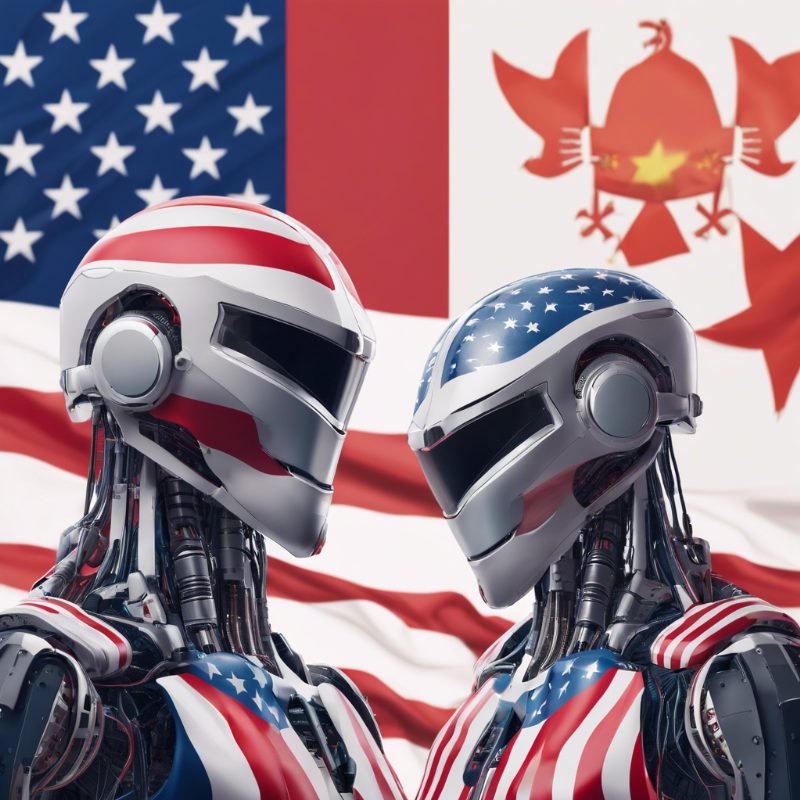
stargate ai initiative$500b ai projectopenai softbank oracleai infrastructure risksai governance oversightus china ai competitionai privacy concerns
Key takeaways
- The $500B Stargate partnership aims to secure U.S. AI leadership and create 100,000 jobs through massive new data center infrastructure.
- Concentrating next-generation AI development among major tech corporations raises critical concerns about profit motives overriding public interest.
- Without robust legal oversight and ethical guidelines, rapid AI expansion threatens to amplify data privacy violations and geopolitical tensions.
"Stargate: A Billion-Dollar Bet on AI That Demands Caution
By Carl James | HumanAIInsight.com
Well, folks, here we are—standing in the shadow of a half-a-trillion-dollar AI moonshot called Stargate. You’ve got President Trump, Sam Altman, Masayoshi Son, and Larry Ellison all patting each other on the back, promising us that this behemoth of a project will secure America’s AI future, create jobs, and drive innovation. Sounds like a dream, right?
Not so fast.
If you’ve been following my work, you already know my stance: Advances with AI must be brought forward with extreme caution so as not to impact humanity negatively. And Stargate? Oh, it’s big, bold, and brash, no doubt about that. But it’s also a potential powder keg of unchecked AI expansion, corporate power grabs, and national security concerns that demand real scrutiny before we start cheering from the rafters.
So, let’s break this beast down piece by piece, separating the promises from the pitfalls, the hype from the hard reality.
What is Stargate, and Why Does It Matter?
At its core, Stargate is a $500 billion public-private partnership spearheaded by OpenAI, SoftBank, Oracle, and the U.S. government to supercharge AI infrastructure in the United States. This means:
Building massive AI data centers across the country, starting with Texas.
Developing next-gen AI models with unprecedented computational power.
Creating an estimated 100,000 jobs in construction, engineering, and tech.
Positioning the U.S. as the undisputed AI leader, especially against China.
The idea is that this colossal investment in AI hardware—think semiconductor fabs, energy-hungry supercomputers, and high-speed data processing facilities—will not only future-proof America’s tech industry but also drive breakthroughs in medicine, defense, and automation.
It’s an undeniably ambitious plan, and if executed correctly, it could shape AI’s trajectory for decades. But if rushed or mishandled, it could unleash a whole new set of dangers that we’re nowhere near prepared to control.
The Promise: A.I. Innovation at an Unprecedented Scale
Let’s be clear: AI is the next great industrial revolution. Whoever controls AI controls the future—in terms of economic power, military strategy, and technological supremacy.
And Stargate’s goals are undeniably appealing:
✅ Economic Growth & Job Creation: With 100,000 jobs on the line, Stargate could create a domino effect of economic revitalization—especially in regions struggling with industrial decline.
✅ American AI Dominance: This isn’t just about tech; it’s about national security. China has been pouring billions into AI, and the U.S. simply cannot afford to fall behind. Stargate positions America as the global AI powerhouse, ensuring that the future of AI is shaped by Western democratic values—not authoritarian surveillance states.
✅ Scientific Breakthroughs: AI advancements could revolutionize healthcare, education, cybersecurity, and energy. Advocates claim Stargate could lead to medical breakthroughs, with AI accelerating cancer research and drug discovery at an unprecedented pace.
Now, I’m not here to throw cold water on progress. The potential here is real. But potential and reality are two different things, and before we get swept away by the Stargate hype train, we need to ask some hard questions.
The Problems: Unchecked AI Power, Privacy Risks, and a Lack of Oversight
If you think Stargate is just a patriotic mission to boost America’s AI standing, you haven’t been paying attention. There are serious concerns—ones that must be addressed before we start throwing tax dollars and corporate power into the AI fire.
- The Concentration of AI Power in Private Hands
At the end of the day, who’s really in control here? The U.S. government may be funding this project, but make no mistake—the real winners are OpenAI, SoftBank, and Oracle.
These are for-profit companies with their own agendas. The notion that they’ll act in the best interests of the public instead of maximizing their own profits? That’s a fairy tale.
OpenAI has already come under fire for abandoning its nonprofit roots and shifting toward a more corporate, profit-driven model.
SoftBank’s Masayoshi Son is betting big on AI, but let’s not forget—the man has made massive, high-risk investments before (WeWork, anyone?).
Oracle, while a powerhouse in cloud computing, has a long history of prioritizing its bottom line over ethics (see: aggressive lobbying, questionable business practices).
We cannot allow a handful of tech giants to control the infrastructure of AI itself—not without serious oversight and accountability measures.
- The AI Arms Race & Geopolitical Risks
Let’s not kid ourselves—Stargate is as much about beating China as it is about AI advancement.
The U.S. and China are locked in a full-scale AI arms race, and while competition can drive progress, it can also drive reckless decision-making.
Are we pushing AI forward too fast, ignoring the potential risks of unregulated development?
Are we inviting geopolitical tensions by making AI dominance a zero-sum game?
What happens if this tech falls into the wrong hands—bad actors, rogue states, or even hostile AI?
The bigger and faster we build AI, the more we risk spiraling into an uncontrollable tech race that could backfire in ways we can’t predict.
- The Privacy & Ethical Time Bomb
AI isn’t just about infrastructure—it’s about data. Lots of it.
With Stargate’s data centers processing trillions of data points, we must ask ourselves:
Who owns the data being collected?
How is it being used, and who has access to it?
Are we building an AI surveillance state under the guise of progress?
We've already seen AI misuse at alarming levels—from biased algorithms to privacy violations (looking at you, DeepSeek). Stargate, if mishandled, could supercharge those problems at an unimaginable scale.
The Verdict: Innovation with Accountability, or Not At All
Here’s my bottom line:
Stargate is a high-risk, high-reward gamble on AI supremacy.
The potential is undeniable—but so are the dangers of unchecked AI expansion.
If this project moves forward without proper oversight, we’re asking for trouble.
I’m not against AI advancement—I’m against reckless AI advancement.
If Stargate is to succeed, it must be governed by strict ethical guidelines, rigorous oversight, and strong legal frameworks to prevent corporate exploitation and national security disasters.
Otherwise? We’re setting ourselves up for a world where AI isn’t serving humanity—AI is controlling it.
So, Mr. President, Mr. Altman, Mr. Son, and Mr. Ellison—if you really want to build the AI future, you better make damn sure you’re not building a monster in the process."
A QUICK ANSWER
Answer Engine Summary
The Stargate initiative is a $500 billion public-private partnership led by OpenAI, SoftBank, Oracle, and the U.S. government to build massive AI data centers and accelerate next-generation models. While proponents emphasize economic growth and national security, experts warn that concentrating AI infrastructure in private hands without rigorous oversight poses severe ethical, privacy, and geopolitical risks. Strict regulatory frameworks are essential to ensure the technology serves humanity safely rather than enabling corporate control or surveillance.
QUESTIONS ANSWERED
Frequently Asked Questions
What is the Stargate AI initiative?
Stargate is a proposed $500 billion public-private partnership spearheaded by OpenAI, SoftBank, Oracle, and the U.S. government to build extensive AI data centers and accelerate next-generation artificial intelligence models within the United States.
Who are the main stakeholders behind Stargate?
The primary corporate stakeholders driving the project are OpenAI, SoftBank Group, and Oracle Corporation, operating in collaboration with federal and state U.S. government entities.
What are the primary risks associated with the Stargate project?
Key concerns include the concentration of unprecedented AI infrastructure power in private hands, potential data privacy and surveillance abuses, and the escalation of an unregulated AI arms race with geopolitical rivals like China.